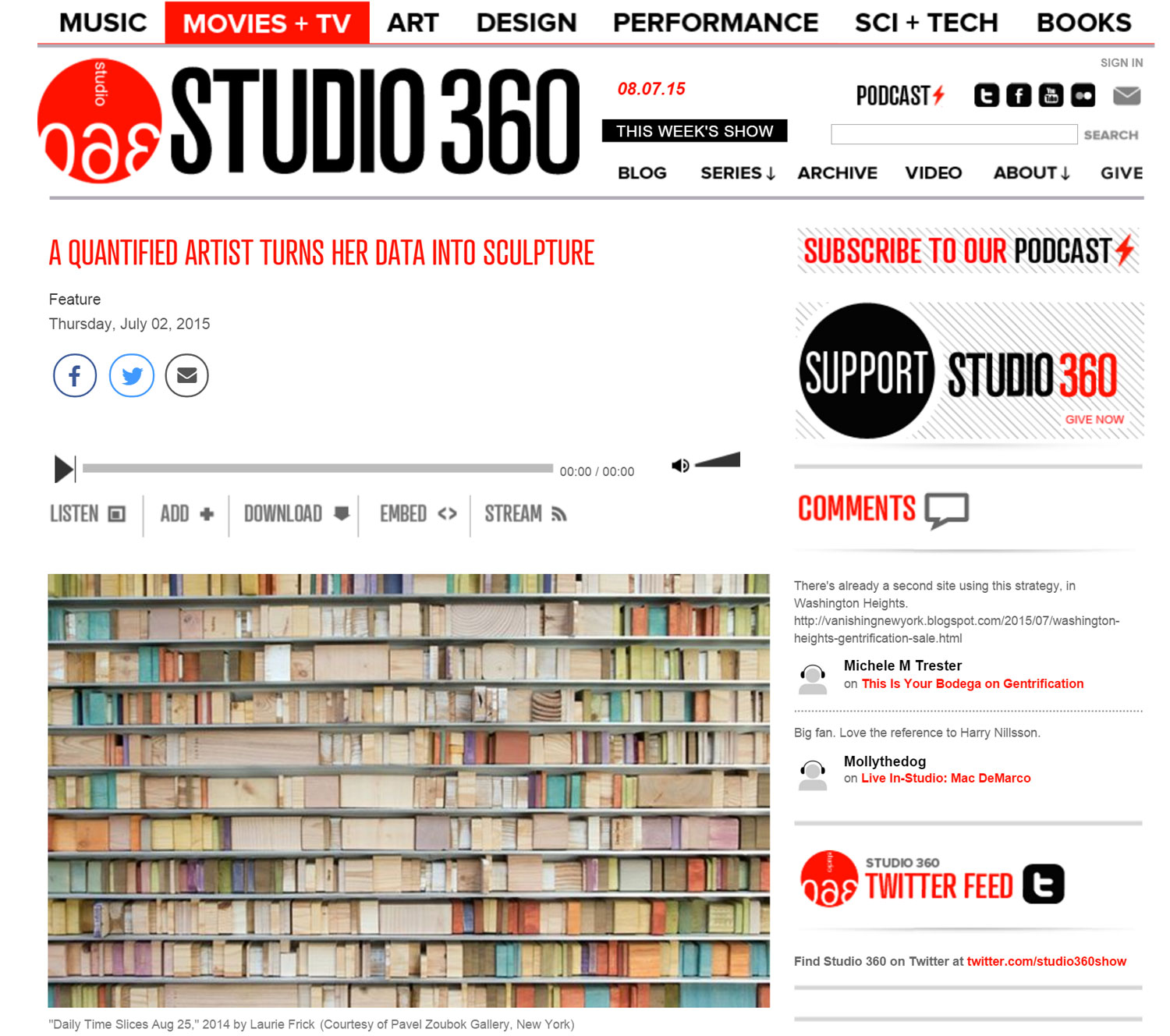
Art that targets the inner mind

What does art look like that targets the inner mind....not the flat, literal renderings of physical brains...but work that tries to feel what is inside your head....look like?  A show at the Drawing Center in 2005 of Agnes Martin, Emma Kunz and Hilma af Klint is the best example of work that uses abstraction as a means to connect cognitive powers, the process of life and visual art. Emma Kunz envisioned art as healing -- which is a powerful idea.  That something visual could trigger your brain chemistry to affect your body.....like a drug.  What if she's not wrong? (Emma Kunz n.d. approx 1930)

Jerry Saltz wrote a beautiful review of the show, about Martin he wrote...."To look at her work is to know what meditation feels like. Many of her early paintings and drawings come on like thunderstorms from across transcendental valleys. The sereneThis Rain (1960) looks like a Buddhist test pattern from the planet Rothko." (Agnes Martin 1963)

Evidence of non-conscious processing

Non-conscious processing exists. Watch the video -- stay til the end. Click here... Derren Brown -- Subliminal Advertising with explanation There is another video with different people, slightly different campaign, but the explanation is not quite as clear, I liked this one better.

Subliminal messages hit your brain and are processed when you need them. Crazy, huh?

If you consider the amount of words and images you encounter in a day, ad guys say it's over 5000 ad messages, and pile on all the other stuff you drive by, walk by, and surf by...it's positively bombarding that 'hunter-gatherer human brain' of yours. 150 years ago you would have seen a few signs in shop windows, maybe pick up a book, read a newspaper....don't you wonder where it's all going? How much can you absorb in a day?

Your brain doesn't have arms, legs and toes

With all the flurry of articles about brain-scans - fMRIs, there's a great article about the fallacy of overintrepreting the lit areas of a scan. Your brain isn't made up of nodes or specific locations for specific activities. It's not like your brain has a spot for looking at a painting, or making a deodorant buying decision...even though research is testing those things, and looking for what 'lights-up' when you engage in such an activity. Scientific American - Five ways brains scans mislead us

(you can read the whole article here, sorry Scientific American, you charge $7.95 to get the full article and I found a pdf for free for you...it's worth a look)

I contend it's still very early days, and the fascination of fMRI testing is in full force. My favorite analogy of all I've read is that memory is more the bits in a blender -- the picture of that is so compelling and vivid. In this article Michael Shermer he makes a clear case for why the brain is more akin to a network, and offers good skepticism about applying too much pop-science to brain scans.

This is your brain on Picasso

Good article in "Psychology Today", July 1, 2009 Unlocking the Mysteries of The Artistic Mind Just a bit of it grabbed here....the 10 rules are scary.

"The interesting thing about kitsch is that it often looks like art," explains Ramachandran. "But it's not art, because it doesn't trigger the same intensity of feeling." He suggests that while kitsch often relies on the same tricks as great art—universal principles such as the peak-shift effect and the peekaboo principle—these tricks aren't as well executed. "Anybody can learn these visual rules," he says. "But you still need talent and training in order to turn them into fine art."

Attempts to define art are nothing new. But Ramachandran is seeking to define it from the perspective of the brain, and he's in the midst of a brain-imaging experiment he believes will help. Subjects lie in an fMRI machine and view examples of kitsch—art objects ridiculed for their shallowness or sentimentality—as well as fine art, like the canvases that hang in museums. A Christmas lawn ornament of Santa Claus might be juxtaposed with a Michelangelo sculpture; an image from a Hallmark card might be compared to a Rembrandt painting. By measuring brain activity, Ramachandran hopes to find out why visual stimuli that seem so superficially similar can generate such different aesthetic reactions.

This is Your Brain on Picasso 10 Perceptual Principles of Great Art

PEAK SHIFT: We find deliberate distortions of a stimulus even more exciting than the stimulus itself—which is why cartoon caricatures grab our attention.

GROUPING: It feels nice when the distinct parts of a picture can be grouped into a pattern or form. The brain likes to find the signal amid the noise.

BALANCE: Successful art makes use of its entire representational space, and spreads its information across the entire canvas.

CONTRAST: Because of how the visual cortex works, it's particularly pleasing for the brain to gaze at images rich in contrast, like thick black outlines or sharp angles—or, as in the geometric art of Mondrian, both at once.

ISOLATION: Sometimes less is more. By reducing reality to its most essential features—think a Matisse that's all bright color and sharp silhouettes—artists amplify the sensory signals we normally have to search for.

PERCEPTUAL PROBLEM SOLVING: Just as we love solving crossword puzzles, we love to "solve" abstract paintings such as cubist still lifes or Cézanne landscapes.

SYMMETRY: Symmetrical things, from human faces to Roman arches, are more attractive than asymmetrical ones.

REPETITION, RHYTHM, ORDERLINESS: Beauty is inseparable from the appearance of order. Consider the garden paintings of Monet. Pictures filled with patterns, be it subtle color repetitions or formal rhythms, appear more elegant and composed.

GENERIC PERSPECTIVE: We prefer things that can be observed from multiple viewpoints, such as still lifes and pastoral landscapes, to the fragmentary perspective of a single person. They contain more information, making it easier for the brain to deduce what's going on.

METAPHOR: Metaphor encourages us to see the world in a new way: Two unrelated objects are directly compared, giving birth to a new idea. Picasso did this all the time—he portrayed the bombing of Guernica, for example, with the imagery of a bull, a horse, and a lightbulb.

The familiar and the novel....and the tension between the two

Steve Genco writes a genuinely insightful blog post "One of the unsolved mysteries of the brain is why it is attracted to both the familiar and the novel, and how these two predispositions duke it out in bringing objects to our conscious attention.  On the one hand, we find the familiar comforting, and often ascribe positive emotional valence to objects just because we have seen them before.  On the other hand, we are attracted to novelty and originality, precisely because it is not familiar.  Aesthetics, I think, is about this attraction to the novel and original, and neuroaesthetics is about what happens in our brains when this attention and attraction occur."

I totally agree, I believe making work that touches the familiar is a powerful way to use visual language to reach out and grab someone.

How much organization is enough?

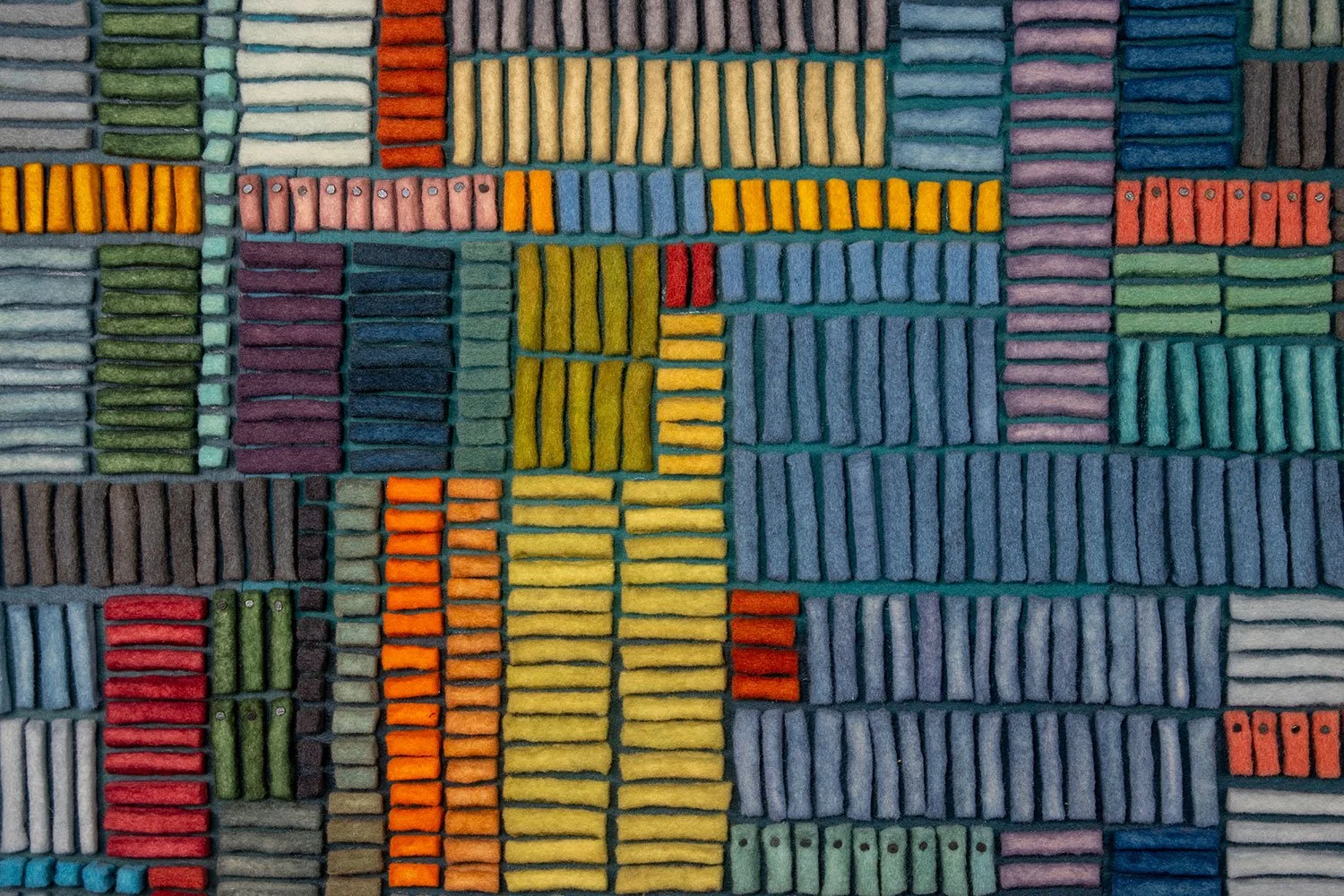
Have been considering the human desire for organization. Isn't that why early northern civilizations survived cold/long winters. Those folks planned enough food for the winter, and prepped early enough to get all done before deep snow, the desire to have all in it's exact place must be buried in the dna. There is something incredibly soothing about the checked-off todo list, the clean counter and scads of old saved 'might possibly use them in the future' art supplies all put away in clear boxes. How much organization does the brain need to feel calm, and how much sends it over the 'I'm totally bored' edge.

I did read that the brain recognizes verticals and horizontals, is that why organization is about stacking and lining things up? Books on a shelf, stacks of paper, cabinets full of drawers, ....rather than piles.

Thinking of those verticals and horizontals -- looked again at several Mondrian paintings at San Francisco MOMA last week, and I do believe he was totally right. It must be vertical and horizontal.