FRICKbits - press release

Your data can now be art on your phone

Artist created free iPhone app to help users reclaim their data and turn it into art

FOR IMMEDIATE RELEASE Austin, Texas -- After a year where many have agonized about all the data gathered about us (e.g., clicks, searches, location, likes) and we’ve learned the meaning of metadata, an artist demonstrates the first chance for you to take back your data and make it artful. Laurie Frick has been transforming her personal data, including location, steps, sleep and weight into abstract, hand-built wall size installations for years.

This year, she teamed up with digital design company thirteen23 to build a free iPhone app to make art algorithms turn your tracking data into abstract patterns on your phone. Launching in September in the Apple store, Laurie Frick is in the midst of a Kickstarter campaign to draw a community of beta testers and art enthusiasts to be the first to download and try FRICKbits when it goes live.

“Art from data was a compelling idea, and we’re drawn to solving new problems in mobile technology” said Doug Cook, founder of thirteen23, “We had never seen a mathematical algorithm tackle the problem of color, shape or pattern let alone express location as hand-drawn art on the phone.”

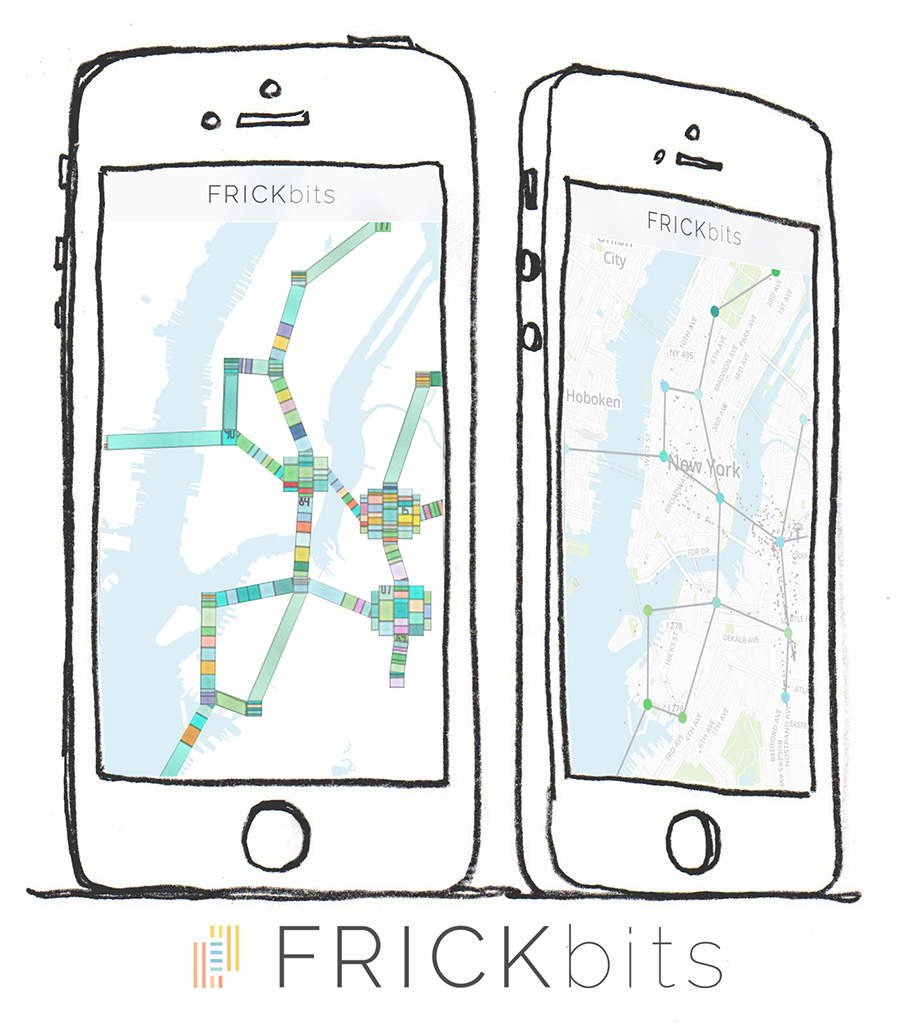
Many websites and fitness apps gather pedometer and location data, but the output has a cold, clinical feel of infographics. Coming from an artist, this app has the characteristics of hand crafted watercolor drawings and attempts to change the way you see the data gathered about you. Out of the gate, FRICKbits uses your location data to draw the patterns of where you travel in a city, or for that matter – anywhere on the globe. “Location data is the easiest to understand, and we tend to go the same places over and over” said artist, Laurie Frick “the pattern of your movements in a city are beautiful and yet often ignored, we just don’t think about them. The repetition of travel patterns and stray movements can transform into an abstract data portrait of you.”

FRICKbits gathers occasional location data, a clever means to not have any noticeable impact on battery life and shows actual location with tiny monotone dots and brightly colored art dots on a clean white map. While the user can choose and change color palette at any time, they ‘earn’ smaller colored bits and clusters for the locations traveled most frequently. Long stretches of pattern stand in for the occasional and high-speed movements. Location data accumulates, and the pattern gathers richness and texture over time. Touch the screen and you shift back and forth from the actual map to the art rendering of your travel patterns. As for privacy, the data belongs only to the user, and it’s up to them to share it via social media, email or text. One button lets you export data or clear it at any time.

Is this the beginning of how personal data will crossover into the world of art? Self-tracking data will be the ultimate ‘data-selfie’, personal data portraits gathered over time on our phones. It’s your life, it’s your data — why not turn it into art?

About

Laurie Frick is a data artist from Austin, Texas who makes hand-built work from self-tracking data, and had an idea that the artistic rules and procedures were really an algorithm to turn anyone’s data into abstract patterns of art. Two years ago, she set out to make an iPhone app…and long story short, met thirteen23 and made a trade. One of the most amazing mobile technology shops in Austin, Texas got a full lobby installation based on their chat metadata, and Laurie Frick got the first iteration of the FRICKbits free iPhone app. Laurie Frick exhibits widely, and is represented by Edward Cella Gallery in Los Angeles.

thirteen23 is an award-winning design studio specializing in digital strategy, user experience design, and software development. Founded in 2006 and based in Austin, Texas, thirteen23 combines breakthrough design with cutting-edge technology to create innovative digital products for its clients. From startups to the Fortune 500, we’ve worked for some of the best, including Electronic Arts, Honeywell, Vice Media, Food Network, and Obama for America. For more information contact us at business@thirteen23.com.

Contact: Laurie Frick, FRICKbits Phone 512.350.5511 laurie@FRICKbits.com http://www.lauriefrick.com @FRICKbits

Take back my data... will art be the beginning of a data revolution?

FRICKbits_pencil_2phones_orange_nologo_72Yesterday, @PJPangburn sent inteview questions for an article about FRICKBits. What was the lead-up to making FRICKbits, this iphone app that turns data into art? What is your background in working with data? I know you work with self-tracking data. Do you use other types of data, and how does this manifest in your art?

Measuring sleep was the self-tracking data that really got me hooked. I have a background in engineering and came up through the ranks in tech companies, quit, went back to graduate school in art and melded the two. The intense curiosity for self-tracking started 4 years ago with measuring how people spend time during the day and during the night. I measure a ton of data about myself, and we run the Austin chapter of the Quantified Self. Turns out sleep data is like a fingerprint, everyone is different but uniquely identifiable. It just hit me, self-tracking data is like a pattern portrait of you.

What was the genesis of FRICKbits?

After making a studio full of hand-built patterns from weight, sleep, daily time, internet use, mood, walking and location data I could see we unconsciously have very eloquent rhythms. We recognize something human in these data patterns, and don’t know why it feels familiar. I thought “why can’t everyone have human data portraits of themselves?” Maybe the future is 3D printed textured wallpaper from our data…but in the meantime, how do we do this on an iPhone?

How did you go about conceiving of and designing it? 

We tried to do it ourselves using Phonegap, and could see that gorgeous simplicity in an iPhone app is the result of complex code, and serious expertise. Magically I got a call from thirteen23, probably the most talented digital design shop in Texas and we quickly agreed on a trade. Straight swap. They wanted to bring some life to the lobby in their new office, and I needed an iphone app. Quickly, we agreed that location data is the easiest for people to understand, they’re familiar with how a route looks on a map. Poof and off we went.

What software did you use? 

FRICKbits runs native on IOS, and there is a lot of performance tuning to make the animation lively and quick.

Is this a way of giving people power over their smartphone and mobile device data?

Right now, it’s a ‘one-sided handshake’, lots of data is tracked about us and it’s hidden or simply not shared. As a data activist, it feels like we’ll get further if we don’t hide, but demand more. Go the other way, and push companies to share your data back with you. I bet people would be astonished with how much is known about them, and the patterns that are extrapolated along with predictions made about their behavior. People look at me and ask “what would I possibly do with my data?” – “Turn it into art!” I say. It’s not so crazy, it’s another version of a data selfie. How else will be begin to shift the equilibrium and have a chance as individuals to fight back, and have a say about the data collected on us? I have a science fiction fantasy that we boost our immune system with mindfulness delivered from data portraits. Art functions as a necessity of daily life.

Do you think that people shouldn't be so afraid of the data they produce?  

I think people should be aware of the data they produce, it’s possible the social good will trump privacy. And we’ll begin to get a sense of ourselves, some level of self-awareness. But this is not like eating vegetables, art makes data sticky. We might actually love it.

You talk about fitness data being cold and clinical. I assume other data feels this way to you. How does your app's algorithm make art taht is the polar opposite?

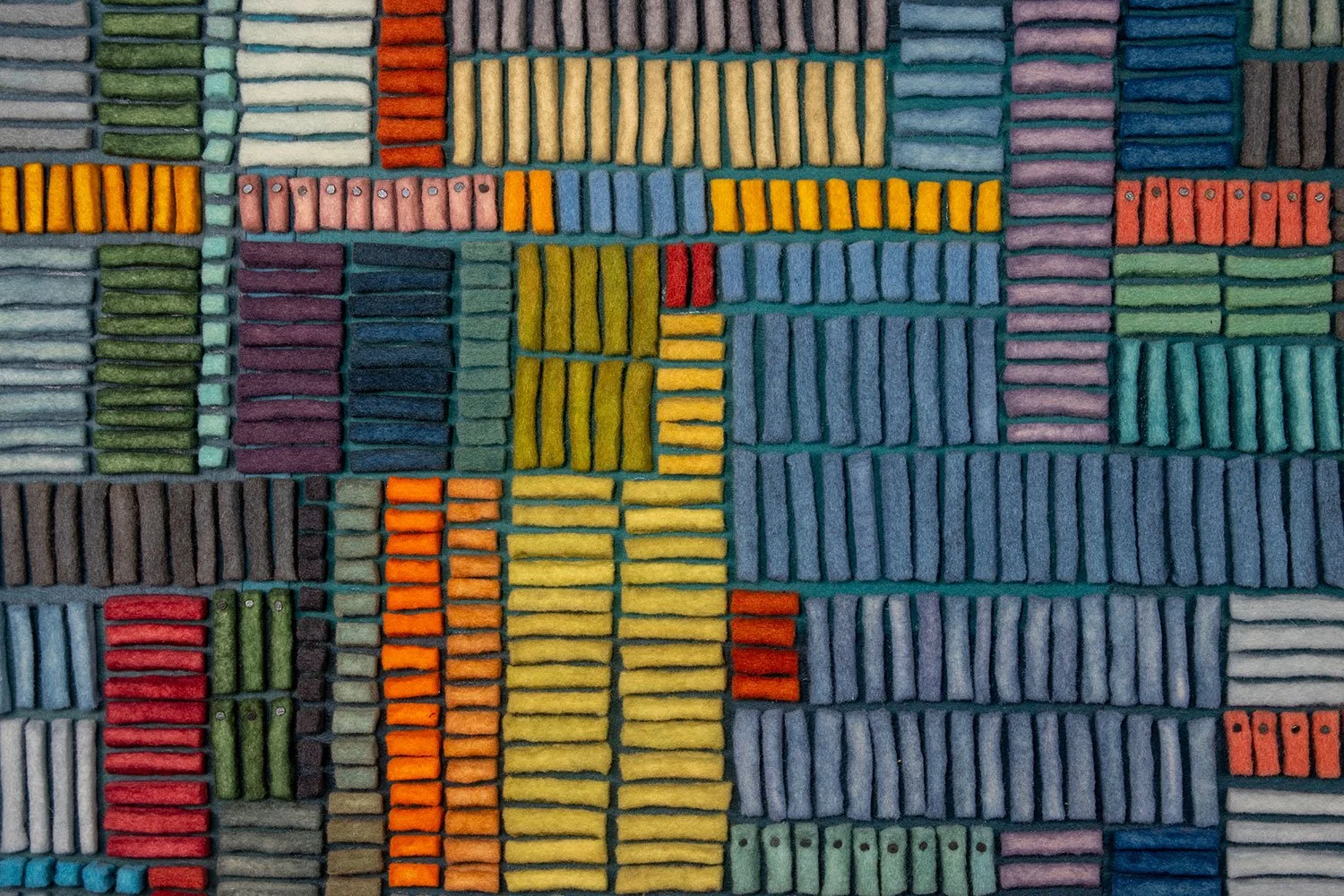
We modeled the algorithm and pattern from my hand-drawn ink and watercolor pattern portraits. It’s a vector based system that mimics squiggly lines and the feel of something hand crafted.

What data can FRICKbits use to make art?

Out of the gate, we are using location data, actually occasional location data so we don’t kill the phone battery. The patterns get better with time, and we don’t want people to turn it off after a few days – so FRICKbits has no impact on battery life. People travel the same places over and over, and it’s quite beautiful the way you cover your route to and from work. Eventually we can draw FRICKbit patterns from any data. I like the idea of using the M7 chip and gathering your speed during the day. Anything that is very indicative of you, but totally unconscious, maybe credit card spending or how often you touch the screen of your phone would be fun data sources.

Any final thoughts on data and art both in the present and future?

I’m very excited about self-tracking data’s ability to predict. Prediction is very close, it’s going to explode people’s minds.

Will artists will profit off their own data after they make into art

Yes, artists will profit from their data, but they will also profit from turning other people’s data into art….cause an app economy will develop around access to more individual personal data.  If more people demand their data, I can see a whole app economy around art from data, analysis tools, coaching and research. Lots of small start-ups and apps that could benefit from people giving private access to narrow segments of their personal data. I don’t think it changes the incentives for large corporations like google and facebook to benefit from tracking us, but if they are required to transparently give it back to us, we might find clever ways to get some meaning out of it.

Launching a kickstarter for FRICKbits tomorrow!

I'm both kindof excited and scared to death. I'm getting ready to push the 'go' button for a kickstarter campaign for FRICKbits tomorrow. (it's LIVE now)FRICKbits_2pencil_phones I make hand-built work from self-tracking data, and realized the rules and procedures I follow are really an algorithm to turn anyone’s data into abstract patterns of art. Two years ago, I set out to make an iPhone app…and long story short, I met thirteen23 and we made a trade. One of the most amazing mobile technology shops in Austin Texas got a full lobby installation based on their chat metadata, and I got the first iteration of the FRICKbits iPhone app. And now I sorely need some funding help to get the free iPhone app into your hands, and finish development. Take back your data and let it mean something to YOU. 

All the tiny measurements can add up to a data portrait of you. Have you ever wondered what’s really known about you? Everything you post, every time you use a credit card, your phone log, search history, your location …mostly it’s a little creepy, and after we revoke a couple permissions for apps we don’t much care about, we try to forget about it. It feels hopeless. Usually when things are the darkest it’s exactly the time it starts to turn around. We’re at that moment right now, it’s not hopeless. But instead of agonizing about every big corporation tracking us …take back your data and make it something good. Use technology to boost a little self-reflection. Not ugly graphs and charts…but genuine art.

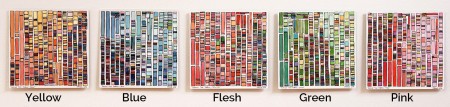
REWARDS are gorgeous heavy metal limited kickstarter edition of Pattern Portraits that inspired the look of FRICKbits.

5_Pattern_Portrait_colors_72

The print on heavy metal has got to be seen to be believed, is also waterproof so you can put them in a kitchen, bathroom, on your desk or in a book shelf. The last award has big size prints too. Choose several and give the others as gifts. Seriously, my work has never been priced so cheap. Am putting every bit of energy into launching this app, am super excited, really want to make the rewards for supporting FRICKbits irresistible!

How many things can you work on simultaneously?

I saw a friend in New York a few weeks back who explained his epiphany that you can work on several serious projects simultaneously. This notion that you give yourself 110% to one single thing is hogwash. If you focus and give the right amount, you can successfully deliver several things at once. Running&Running, 2 panels. 25" x 50", handcut paper on aluminum, maple frame.

I've been repeating this inside my head as I work to launch FRICKbits, get the feedback from beta testers, prep a kickstarter campaign, finish works for my LA dealer to take to the Houston Contemporary artfair, take on a new consulting assignment for a major (seriously huge) mobile phone manufacturer who thinks art from data is cool.

Here is one of four works I'm prepping for the artfair in Houston.

Floating Data piece during installation

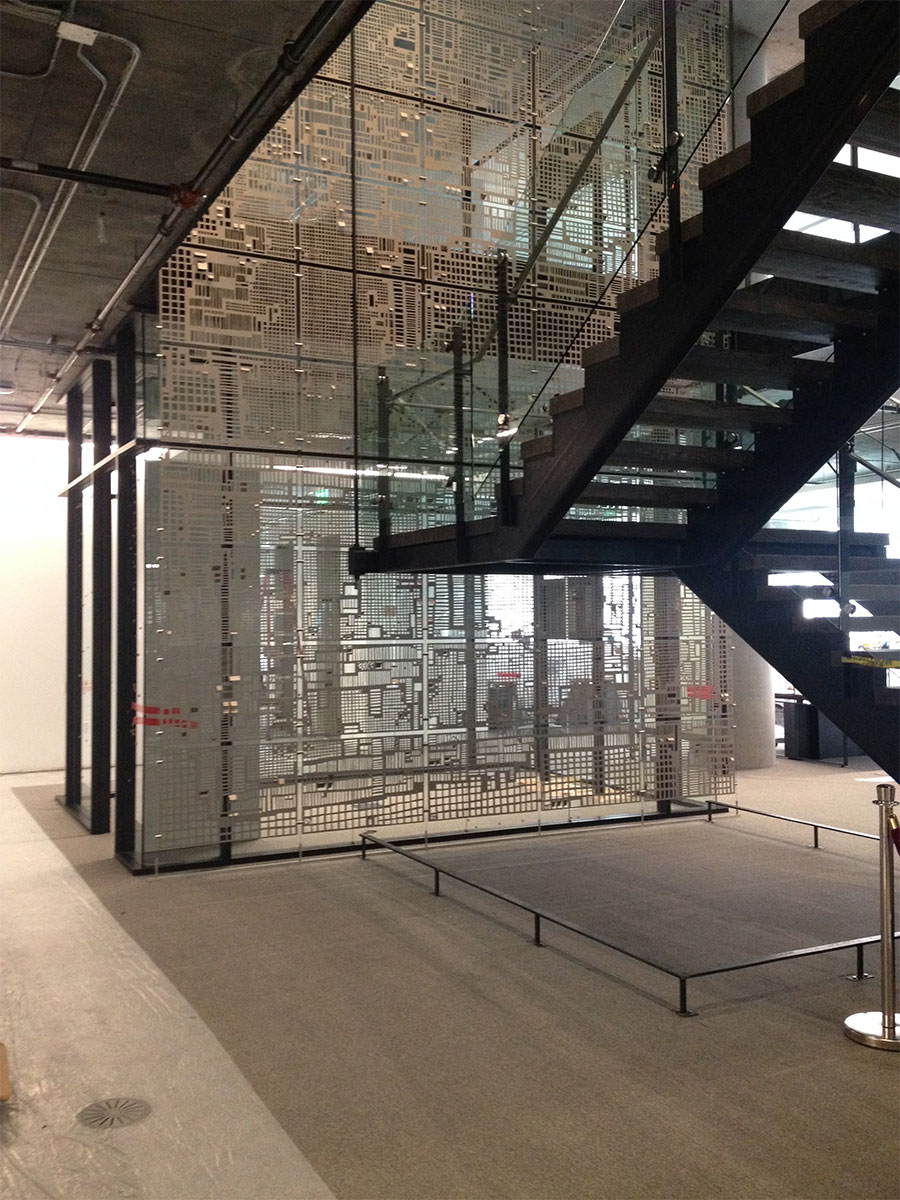
Last week, I flew to SF with great nervousness....I'd worked for months on a piece fabricated by Neal Feay Company in California for a 2-story indoor installation of 60 panels in anodized aluminum. 25 ft x 15 ft piece, going into a Big-Data company in San Francisco - new construction on Howard and 1st St. And because I'm pretty excited that it all worked, I'm posting pics here of the construction site. We were scheduled to install during the last week before they handed the building over to the new owners, and we were using a big elaborate scaffolding to get to the ceiling 25 feet above. These are iphone pics...I'll take the gorgeous shots next month.Floating_data_underneath_during-construction


Art from data slides, and why my motto is don't hide...get more

Manictime, center view, 30 in x 14 ft, cut wood, pigment on aluminum shelf, 2014. This is the link to slides for my talk at ITP summer camp at NYU (5mb pdf). Frick_art_from_data_v2

At this moment, data gathering and surveillance feels like it's at the bleakest point. No place to hide and we individuals have no power in this big-data conversation. If we press companies to be socially responsible...to share the data they collect with us for DATA transparency, we can cause a slow shift of power to the user and shift the equilibrium. Resulting in an ecosystem of apps, that we as users can play with....for example, abstract art and textured wall patterns from our data. Your hidden patterns and data have meaning, and can be the core of understanding who we are. Apps like FRICKbits will start to give artful insight to data about us that we normally ignore.

In the meantime, start tracking yourself and notice what it might say about you. "Don't hide, get more".